

You got a message. You replied with something nice, maybe even sent a gift or offered a favor. Then came back two letters and a Y: NTY. Now you’re staring at your screen wondering if you said something wrong.
You did not. The NTY meaning in the text is simply “No Thank You,” and once you understand it, the confusion disappears fast. This guide breaks it all down, including when to use it, when to avoid it, and why people reach for it instead of typing the full phrase.
What Does NTY Mean in Text?
NTY stands for “No Thank You.”
It is a short, casual abbreviation used in text messages, online chats, and social media replies. When someone sends you NTY, they are politely declining something, whether that is an offer, invitation, suggestion, or favor.
Think of it as the digital version of saying “thanks, but I will pass” without typing all those extra words.
| Abbreviation | Full Meaning | Tone |
| NTY | No Thank You | Polite but brief |
| TY | Thank You | Warm and grateful |
| NVM | Never Mind | Casual, dismissive |
| NP | No Problem | Relaxed and friendly |
| YW | You’re Welcome | Warm response to thanks |
Where Did NTY Come From?
NTY grew out of internet chat culture in the early 2000s.
Back then, platforms like AIM, MSN Messenger, and early SMS had character limits and slow keyboards. People needed faster ways to communicate full thoughts without burning time or data. Abbreviations like LOL, BRB, and BTW became common vocabulary, and NTY followed naturally from that same habit.
It was not invented by one person or one platform. It just evolved organically, the same way most texting shorthand does: someone typed it, others understood it, and it spread.
Today it lives comfortably across texts, Discord servers, gaming chats, Twitter replies, and anywhere quick digital conversation happens.
Does NTY Have Any Historical or Formal Roots?

Here is something interesting. The phrase “No Thank You” itself has been part of polite English for centuries.
In formal etiquette, particularly in Victorian-era social culture, declining an offer gracefully was considered a sign of good character. You did not just say “no.” You said “no, thank you,” preserving the other person’s dignity while standing firm in your refusal.
That same intention lives inside the modern abbreviation. NTY still carries that courteous backbone. It is not a rude rejection. It is a quick, respectful decline with the “thank you” still attached.
So in a way, NTY is just an old-fashioned courtesy wearing modern texting clothes.
How Is NTY Used in Real Conversations?
NTY shows up in everyday situations more than you might think. Here are some realistic examples:
Example 1: Turning down food
Friend: “Want the last slice of pizza?” You: “NTY, I’m stuffed.”
Example 2: Declining an invitation
Coworker: “Coming to the Friday happy hour?” You: “NTY, got plans already. Have fun though!”
Example 3: Refusing an offer in a game chat
Player: “I can give you extra coins for your character.” You: “NTY, I’m good where I am.”
Example 4: Passing on unsolicited advice
Relative: “You should really try my diet plan.” You: “Lol NTY, but appreciate it.”
Notice how NTY works smoothly across totally different contexts. It does not feel cold or harsh. It just feels quick.
Is NTY Polite or Rude?
NTY is polite in casual conversation, but context matters a lot.
The “thank you” part of “No Thank You” is what keeps it respectful. That small inclusion makes a real difference. Compare these:
- “No.” — Short and can feel dismissive.
- “NTY.” — Still short, but the implied appreciation softens it.
That said, NTY is not appropriate in every situation. If someone is reaching out with a serious offer, a formal invitation, or a heartfelt gesture, replying with NTY alone might come across as cold or dismissive, even if that was not your intention.
Use your judgment. In casual texting with friends, NTY fits perfectly. In a professional email thread or a sincere moment, type out “No, thank you” in full. The extra seconds are worth it.
NTY vs. Similar Abbreviations: Which One Should You Use?
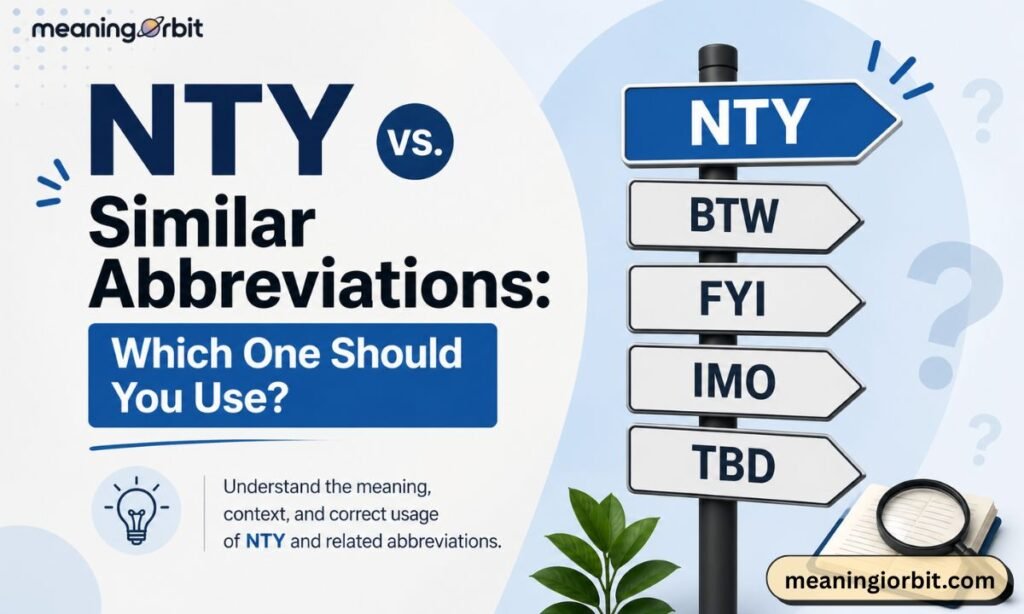
Choosing the right abbreviation depends on tone, relationship, and context. Here is a quick breakdown:
Use NTY when:
- You are declining something casually and quickly.
- The conversation is light and informal.
- You want to keep things brief but not cold.
Use “No thanks” (typed out) when:
- The situation is slightly more personal but still casual.
- You want to sound warmer without going fully formal.
Use “I appreciate it, but no” when:
- Someone has put real effort into the offer.
- The conversation carries more emotional weight.
Avoid NTY when:
- Responding to a serious professional message.
- Declining something emotionally significant, like a gift or a kind gesture from someone going through a hard time.
The rule is simple: the more meaningful the offer, the more meaningful your decline should sound.
Common Mistakes People Make with NTY
Mistake 1: Using NTY in formal settings Sending NTY in a work email or a professional Slack message can make you look disengaged. Always read the room.
Mistake 2: Confusing NTY with NVM NVM means “Never Mind,” which is very different from “No Thank You.” Using NVM when you mean NTY can create real confusion, especially if someone thinks you are withdrawing something rather than declining it.
Mistake 3: Sending NTY without any follow-up If a friend made a real effort to invite you somewhere or offer you something thoughtful, NTY alone feels abrupt. Add a word or two: “NTY but seriously thank you for thinking of me.”
Mistake 4: Overthinking someone else’s NTY If someone sends you NTY, it is not a personal attack. It is just a quick decline. Do not spiral. They said no thank you, not no to you as a person.
Related Texting Abbreviations Worth Knowing
While you are here, a few related terms that work alongside NTY in digital conversation:
TY means “Thank You.” The positive version of NTY. If someone does something kind and you want to acknowledge it fast, TY does the job.
TYSM stands for “Thank You So Much.” A warmer, more enthusiastic version of TY, used when you genuinely want to show appreciation.
IK means “I Know.” Sometimes paired with NTY when someone already knows what is being offered and still declines.
NGL stands for “Not Gonna Lie,” often used before an honest but gentle rejection, like “NGL, NTY on that plan.”
Learning these alongside NTY helps you read digital conversations much more naturally.
How Tone Changes NTY in Different Platforms
The same abbreviation can feel very different depending on where you use it.
On gaming platforms like Discord or in-game chats, NTY is totally standard and nobody blinks. The culture there is built on fast, efficient communication.
On Instagram or Twitter, NTY in a comment might come across as slightly blunt, depending on what was posted. Adding an emoji softens it significantly.
In group chats with close friends, NTY is fine with no additions at all. Everyone already knows the vibe.
In a newer relationship or a professional group, write it out. “No, thank you” takes two seconds and avoids any misread tone entirely.
Can NTY Be Used Sarcastically?
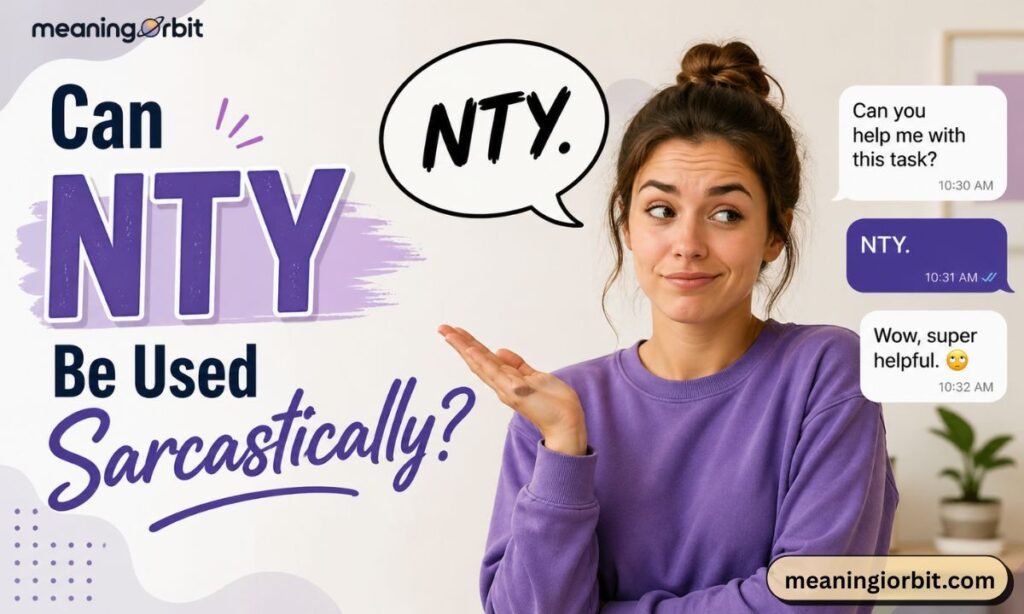
Yes, and it often is.
In internet humor culture, NTY has taken on a sarcastic life of its own. People will say NTY as a funny, exaggerated refusal to something completely absurd, like:
“Would you like to be assigned a group project at 11 PM?” “NTY, hard pass, goodbye.”
That version of NTY is not really a polite decline. It is more of a comedic “absolutely not.” Context clues usually make it obvious which NTY you are dealing with, the polite one or the dramatic one.
Frequently Asked Questions
What does NTY mean in a text message?
NTY means “No Thank You.” It is a brief, polite way to decline an offer, invitation, or suggestion in casual digital conversation.
Is NTY rude to send?
Not in casual conversation. The “thank you” embedded in the abbreviation keeps it respectful. However, in more serious or formal situations, typing out “No, thank you” in full is the better choice.
Is NTY the same as saying no?
Technically yes, but with more courtesy attached. NTY carries the spirit of a polite refusal rather than a blunt rejection. It is a no with good manners still intact.
Conclusion
It is quick, it is polite, and it does the job without drama. Whether you are turning down extra pizza, skipping a social event, or declining an offer in a game, NTY gets your message across clearly and kindly.
The only real trick is knowing when to use it and when to slow down and type the full phrase. Casual conversation? NTY is perfect. Something with more weight behind it? Give it the full sentence it deserves.
Now the next time someone sends you NTY, you will not spend five minutes wondering what went wrong. You will just know: they said no, they meant it kindly, and the conversation can move forward without confusion.

William is a dedicated writer in the meaning niche with 4 years of experience, helping readers understand the true meanings of words and ideas in a simple way.His goal is to make understanding meanings simple, useful, and engaging for everyone.

1 thought on “NTY Meaning in Text: What It Really Means and How to Use It Right”