

You just got a text that says “ash” and now you are staring at your screen wondering if autocorrect just had a meltdown. You are not alone. This tiny three-letter word confuses thousands of people every day.
So here is the simple answer: “ash” in text slang most commonly means “as hell” used to intensify a feeling or description. If someone says “tired ash,” they mean they are extremely tired. That is it. Now let us go deeper.
What Does “Ash” Actually Mean in Text?
“Ash” is a shorthand version of the phrase “as hell.” When someone types it after an adjective, they are cranking up the intensity of what they are saying. Think of it as a volume knob for emotions.
So when your friend texts “bored ash” at 2 AM, they are not talking about fireplace leftovers. They are telling you they are extremely bored and probably need you to suggest something fun immediately.
Real-Life Usage Examples You Will Actually Recognize

Seeing it in action makes it click instantly. Here are common ways people use “ash” in everyday texting:
- “That movie was scary ash” — The movie was extremely scary
- “I am hungry ash, let us order pizza” — Intensely hungry
- “She was rude ash for no reason” — Shockingly rude
- “This homework is hard ash” — Frustratingly difficult
- “He is funny ash, I cannot stop laughing” — Hilarious
Notice the pattern. “Ash” always follows an adjective and pumps up its meaning. It never really stands alone as a full statement.
Where Did This Slang Come From?
“As hell” has been part of casual spoken English for decades. Saying something is “hot as hell” or “cold as hell” is nothing new. What changed is how people communicate digitally.
When texting and social media became everyday habits, speed became everything. Typing full words felt slow. So people started clipping phrases. “As hell” became “af” (as f***) for many, but for those who wanted something slightly softer or just different, “ash” emerged as an alternative.
It gained real traction on platforms like TikTok, Twitter (now X), and Snapchat, where short captions and quick reactions drive communication. Gen Z in particular adopted it fast because it fit perfectly into their style of punchy, expressive messaging.
“Ash” vs “AF” vs “Hella”: What Is the Difference?
These three slang intensifiers do similar jobs but carry slightly different flavors. Here is a quick comparison to keep things crystal clear:
| Slang | Stands For | Intensity Level | Tone |
| Ash | As hell | High | Casual, mild edge |
| AF | As f*** | Very high | Stronger, more intense |
| Hella | Very / a lot | High | Regional (West Coast US) |
| Dead | Extremely | Very high | Dramatic, humorous |
“Ash” sits comfortably in the middle. It is expressive without being too harsh, which makes it popular across different age groups and platforms. If “af” feels too strong for your message, “ash” is a natural step down.
Is “Ash” Always Slang? Other Meanings Worth Knowing
Here is where it gets a little more layered. “Ash” has multiple meanings depending on the context, and confusing them can lead to some genuinely funny misunderstandings.
Outside of slang, “ash” refers to:
- The powdery grey residue left after something burns (think campfire or cigarettes)
- The ash tree, a common tree species found across North America and Europe
- A name, both a given name and a surname used around the world
So if someone texts you “sitting by the ash” they likely mean a tree or a fireplace, not that they are intensely sitting somewhere. Context, as always, saves the day.
The Biblical and Historical Weight of the Word “Ash”
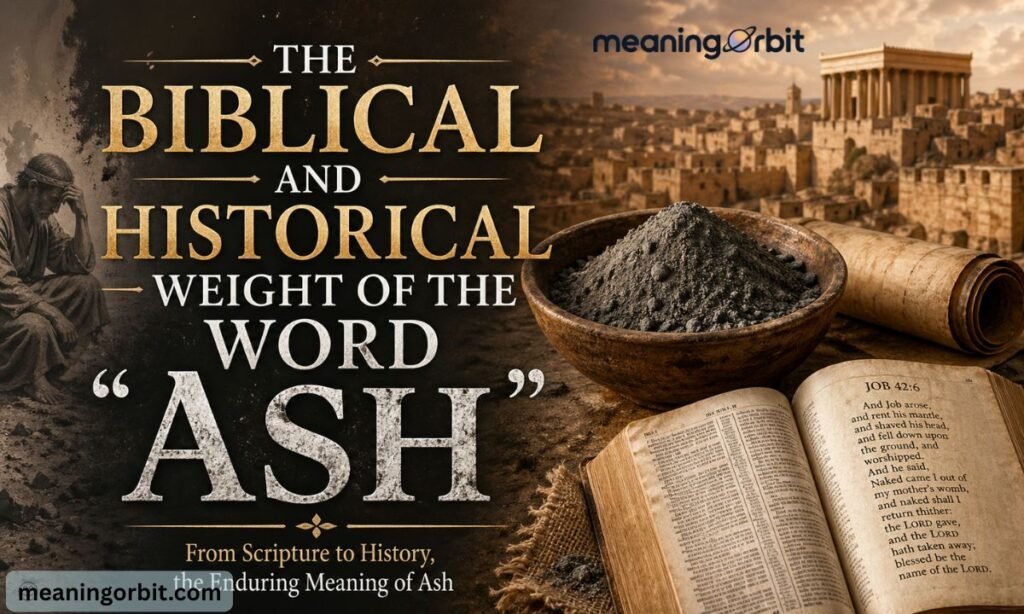
This part most articles completely skip, and that is a missed opportunity because it is genuinely fascinating.
In biblical and ancient traditions, ash carries deep symbolic meaning. It represented mourning, humility, and repentance. In the Bible, figures covered themselves in sackcloth and ashes to show grief or contrition before God. The phrase “ashes to ashes, dust to dust” from the Book of Common Prayer, rooted in Genesis, reflects the idea that human life begins and returns to the earth.
In many ancient cultures, ash was also seen as a purifier. It was used in rituals, medicines, and even soap making. The Japanese phrase “mono no aware” (the bittersweet awareness of impermanence) is philosophically linked to the imagery of ash and burning.
None of this connects to the texting slang, of course. But it does show how a single word can carry centuries of meaning before someone turned it into shorthand on their smartphone. Language is wild like that.
Common Mistakes People Make With “Ash” in Text
Getting slang slightly wrong is more common than anyone admits. Here are the most frequent errors to avoid:
Mistake 1: Using it as a standalone response Writing just “ash” as a reply does not make sense. It needs an adjective before it. Say “tired ash,” not just “ash.”
Mistake 2: Confusing it with “ashy” “Ashy” in slang means dry, flaky skin or looking unkempt, especially used in Black American vernacular. It has nothing to do with “ash” as an intensifier.
Mistake 3: Overusing it in formal settings This one is obvious but worth saying. Do not drop “ash” into a work email or a professional message. Your manager does not want to read that the quarterly report was “confusing ash.” Save it for friends.
Mistake 4: Assuming everyone knows it Older contacts or people outside certain online communities may genuinely not know this slang. When in doubt, just write it out fully.
Also Read This: “Ash” Meaning in Text: The Complete Guide to This Slang Term
Which Version Should You Actually Use?
If you want to intensify something in a text or caption and you are deciding between ash, af, or hella, here is the simple breakdown:
Use “ash” when you want to sound expressive but keep it relatively clean. It works well in group chats, social media captions, and casual conversations with friends of all ages.
Use “af” when you want maximum emphasis and you are talking to someone who will not mind the stronger language.
Use “hella” if you are from or connected to West Coast American culture, or if your friend group already uses it naturally.
The golden rule is always: match your audience. Slang lands best when the person you are talking to speaks the same digital language.
How “Ash” Fits Into Modern Digital Communication
Modern texting is not just words. It is a whole compression system for human emotion. People say more in fewer characters now than ever before, and slang like “ash” is a big reason why.
The rise of short-form content on TikTok and Instagram Reels has pushed this trend even further. Captions need to hit hard and fast. Slang fills that need perfectly. A caption reading “obsessed ash” communicates passion and personality instantly, without needing a full sentence to get there.
This is also why slang evolves so quickly. What feels fresh today might sound outdated in two years. But the underlying human need — to express feeling quickly and vividly — never changes.
Does “Ash” Mean the Same Thing Everywhere?
Mostly yes, but regional and cultural usage can shift things slightly.
In American English slang, “ash” is overwhelmingly used as “as hell.” In British English and other English-speaking regions, people may be less familiar with it or use different intensifiers like “proper,” “bare,” or “well.”
Online communities tend to flatten these differences over time. A word that starts in American teen slang on TikTok can spread globally within weeks. So while “ash” might have American roots in this usage, it is now genuinely international.
Frequently Asked Questions
Is “ash” appropriate for all ages?
“Ash” is generally considered mild slang since it is a softened form of “as hell.” Most people use it freely in casual settings, but it is still informal language best suited for personal conversations rather than professional or academic ones.
Can “ash” be used sarcastically?
Absolutely. Tone matters in texting just as in speech. Saying “fun ash” after a boring experience can land as sarcasm, especially if paired with an eye-roll emoji. Context and relationship with the person determine how it reads.
Is “ash” the same as “asf”? Not exactly.
“Asf” stands for “as f***” and is a stronger version of the same idea. “Ash” is milder. Both intensify adjectives but “asf” carries more punch and stronger language connotations.
Conclusion
“Ash” is one of those tiny words that does surprisingly heavy lifting. In the world of texting, it takes any emotion and makes it bigger, louder, and more vivid. Tired becomes extremely tired. Funny becomes hilarious. It is a linguistic amplifier wrapped in three letters.
Now that you know what it means, where it comes from, how to use it, and when not to, you are fully equipped. The next time someone texts you “this weather is cold ash” you will not even blink. You will just reach for your coat.

William is a dedicated writer in the meaning niche with 4 years of experience, helping readers understand the true meanings of words and ideas in a simple way.His goal is to make understanding meanings simple, useful, and engaging for everyone.

1 thought on ““Ash” Meaning in Text: The Complete Guide to This Slang Term”