

You just saw “DSL” in a comment, a meme, or a text message. You nodded like you totally understood it. You did not.
That is completely fine because DSL slang meaning confuses a lot of people, mostly because the same three letters mean completely different things in different situations. This article clears all of that up fast, so you never have to fake-nod again.
What Does DSL Mean in Slang?
DSL in slang stands for “Dick Sucking Lips.” It is a slang term used to describe someone who has naturally full, plump, or pouty lips. The phrase is used as a compliment in many circles, though it is explicitly sexual in nature. You will mostly find it in casual conversations, comment sections, social media captions, and text messages between close friends.
If someone calls your lips “DSL,” they are not talking about your internet connection. They are commenting on the shape and fullness of your lips, usually in an admiring way.
Where Did This Slang Come From?
Like most internet slang, DSL grew out of informal online communities in the early 2000s. Forums, chatrooms, and early social media platforms were full of people creating shorthand for things they could not say outright in public. The acronym format made it easier to slide a suggestive compliment past content filters and into everyday conversation.
The irony is brilliant, honestly. The acronym shares its letters with Digital Subscriber Line, a type of broadband internet technology. That double meaning is exactly what made it stick. It sounds technical enough to confuse parents and content moderators, but everyone in the know understood exactly what was being said.
Over time, it moved from niche internet forums into mainstream slang, especially on platforms like Twitter, Instagram, TikTok, and in hip hop lyrics. The term got picked up in music and pop culture, which cemented it as a recognizable part of modern slang vocabulary.
DSL as Internet Slang vs. DSL as Tech Terminology
Here is where things get genuinely interesting. The same three letters carry completely separate meanings depending on context. Understanding which one is being used takes about two seconds once you know both.
| Context | What DSL Means | Example Usage |
| Slang / Social Media | Dick Sucking Lips | “She’s got DSL, no cap” |
| Technology / Internet | Digital Subscriber Line | “Our DSL speed is 25 Mbps” |
| Domain-Specific Language | A specialized programming language | “We built a DSL for our API” |
| Casual Compliment | Full, attractive lips | “Those DSL lips though” |
So if your IT manager walks over and starts talking about DSL performance, stay calm. They are talking about internet bandwidth, not anything else.
How People Actually Use DSL in Conversation
Seeing a word defined is one thing. Seeing it used in real life is what actually makes it click. Here are some realistic examples of how people drop DSL into everyday language.
In a comment section: “That new photo is everything. DSL energy on full display.”
In a text between friends: “Did you see the new guy in accounting? DSL. That is all I am saying.”
In a caption: “Nature gave me DSL and I am not apologizing.”
As a compliment at a party: “Your lips are literally DSL goals, I am not even joking.”
Notice that in all of these, the tone is light, flirty, or humorous. Nobody sits down at a formal dinner and brings up DSL. This is slang that lives in casual, comfortable, and often playful conversations.
Is DSL a Compliment or an Insult?
This is the question most people quietly wonder but rarely ask. The honest answer is: it depends entirely on who is saying it and how.
For most people, especially those within communities where this slang is common, being called DSL is a genuine compliment. Full lips have long been considered attractive across many cultures. When someone says it with warmth, humor, or admiration, it lands as flattering.
However, it is also explicitly sexual. The full phrase is not subtle at all. In certain settings, calling someone DSL without knowing them well or without reading the room correctly can come across as inappropriate or objectifying. Context, tone, and relationship all matter here.
If someone you barely know drops it on you unprompted, you are not wrong to find that uncomfortable. If your best friend says it while hyping you up before a night out, it reads completely differently.
The Historical and Cultural Thread Behind This Slang
Lip appreciation has a surprisingly long history. Full lips have been celebrated in art, literature, and culture for centuries. Ancient Egyptian paintings depicted full, carefully colored lips as a mark of beauty. The Song of Solomon in the Bible literally describes lips as “like a scarlet ribbon” and praises their beauty in poetic detail.
In the 20th century, Marilyn Monroe’s signature pout became one of the most imitated looks in the world. By the time the internet arrived, cultural appreciation for full lips was already deeply embedded in beauty standards globally.
DSL as a slang term is really just the internet’s unfiltered, acronym-coded version of something humans have admired for a very long time. The packaging changed. The sentiment did not.
Also Read This Meaning: What Does SMT Meaning in Text
Related Slang Terms Worth Knowing
DSL does not exist in isolation. It sits alongside a handful of related terms that pop up in similar conversations. Knowing them gives you a much fuller picture of how this kind of slang actually works.
Pillow lips: A softer, non-sexual way to describe very full, cushiony lips. More commonly used in beauty and fashion contexts.
Lip goals: Used when someone’s lips are considered exceptionally attractive or aspirational, often as a compliment or reaction to a photo.
Pout: Not slang exactly, but used casually to describe full lips or the expression made when lips are pushed forward. Often used in fashion and beauty writing.
Kissy lips: A playful, casual version used mostly in lighthearted or humorous contexts, especially with younger audiences.
These related terms give you options depending on how formal, flirty, or casual you want to sound. DSL is the boldest of the bunch. The others give you a softer entry point into the same territory.
Common Mistakes People Make With DSL Slang
Getting slang wrong is embarrassing in a very specific way. Here are the mistakes people make most often, so you can avoid them cleanly.
Mistake 1: Using it in professional settings.
This one should be obvious but people somehow still slip up. Do not use DSL slang in a work email, a meeting, or anywhere a reasonable person would raise an eyebrow. The tech meaning of DSL is the only version that belongs in a professional context.
Mistake 2: Using it with someone you do not know well.
DSL slang is intimate. It implies a level of comfort and familiarity. Dropping it on a stranger or a new acquaintance reads as too forward and often inappropriate.
Mistake 3: Confusing the two meanings out loud.
If you are in a tech conversation and someone mentions DSL speed, do not smirk and reference lips. The joke has been made approximately four million times and nobody finds it funny anymore.
Mistake 4: Assuming it is always positive.
While it usually functions as a compliment, not everyone wants their physical features described in explicitly sexual slang. Read the person, read the room, and read the relationship before using it.
Which Version of DSL Are You Actually Dealing With?
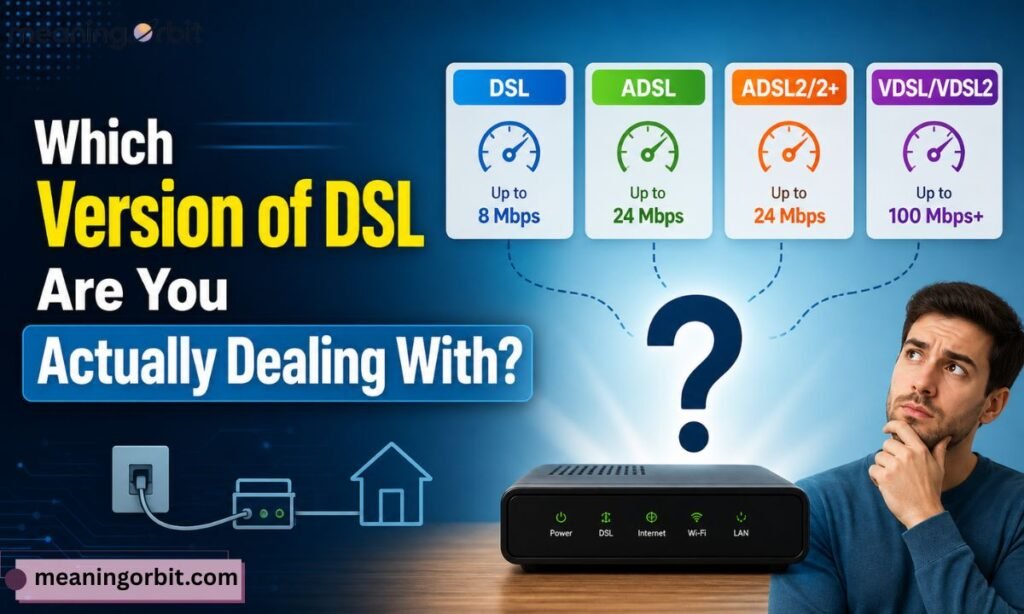
By now you can probably figure it out from context alone, but here is a simple guide to make it even faster.
If you are reading about internet speeds, network connectivity, phone lines, or broadband: That is Digital Subscriber Line. Pure technology. Nothing edgy about it.
If you are reading a comment under someone’s photo, a flirty text, a hip hop lyric, or a social media caption: That is almost certainly the slang version referring to lips.
If someone is talking about code, programming, or software architecture: That is likely Domain-Specific Language, a technical term from computer science.
Should You Use DSL Slang?
If you are comfortable with the person, the setting feels right, and you know it will land well, go ahead. It is a recognized part of modern slang and most people in the know understand exactly what it means.
If you are not sure about any of those three things, pillow lips or lip goals will get you the same compliment with zero awkwardness. Sometimes the softer version is just the smarter move.
The best slang users are not the ones who know the most terms. They are the ones who know exactly when to use them and when to leave them alone.
Frequently Asked Questions
Is DSL slang appropriate to use in public?
It depends. In close, casual friend groups where everyone is comfortable with adult humor, it is fine. In public or around people you do not know well, it is better to skip it. The full phrase it abbreviates is explicitly sexual, so exercise judgment.
Can DSL be used about men?
Yes. While it is more commonly used about women, the term has no gender restriction. It is applied based on physical appearance, not gender, and you will find it used about anyone with notably full lips.
Why do people use acronyms for slang like this?
Acronyms allow people to say something suggestive without spelling it out completely. It creates a layer of plausible deniability, slides past content filters more easily, and gives the phrase a casual, coded quality that makes it feel like inside knowledge. That sense of “knowing the code” is part of what makes slang fun in the first place.
Conclusion
DSL slang meaning is simple once you know it: full, attractive lips, described through a bold acronym that doubles as an internet technology term.
Its roots are in early internet culture, its usage is casual and often complimentary, and its staying power comes from that perfect accidental collision with a totally innocent tech abbreviation.

William is a dedicated writer in the meaning niche with 4 years of experience, helping readers understand the true meanings of words and ideas in a simple way.His goal is to make understanding meanings simple, useful, and engaging for everyone.
