

You got a “wsp” in your inbox and now you’re staring at your phone like it owes you an explanation. No worries. You’re not the only one who has paused mid-scroll wondering what that three-letter word actually wants from you.
WSP in text means “What’s up?” It is a casual, shorthand greeting used in everyday digital conversations, especially on platforms like Snapchat, Instagram DMs, iMessage, and WhatsApp. If someone sends you “wsp,” they are simply checking in or starting a conversation.
What Does WSP Mean in Text Exactly?
WSP stands for “What’s up?” and functions as an informal hello. It carries the same energy as waving at someone across the street. It is not urgent. It is not loaded. It is just someone saying, “Hey, I’m thinking about you, what’s going on?”
The phrase “What’s up?” itself has been a staple of American casual speech for decades. In text form, it got shorter and shorter over time: “what’s up” became “wuts up,” then “wassup,” then “wsp.” That is how language evolves in the digital age. Speed wins.
When someone texts you “wsp,” they typically want one of three things:
- To start a conversation with no particular agenda
- To check in and see how you are doing
- To ask what you are currently up to or what your plans are
Where Did WSP Come From?
WSP grew out of the broader texting abbreviation culture of the early 2000s. Before smartphones made typing effortless, every letter cost effort (and sometimes money, thanks to limited SMS plans). So people got creative. Full words became abbreviations. Greetings became codes.
“What’s up?” was already a deeply casual phrase borrowed from African American Vernacular English (AAVE) and widely popularized through media, movies, and music throughout the 1990s. Budweiser’s famous “Wassup!” ad campaign in 1999 cemented it as a cultural touchstone. From there, the phrase lived on in digital form and kept shrinking.
WSP became especially common among Gen Z users on Snapchat and Instagram, where fast, low-effort communication is basically the love language of an entire generation. No punctuation, no capital letters, no drama. Just “wsp” and vibes.
How Is WSP Used in Real Conversations?
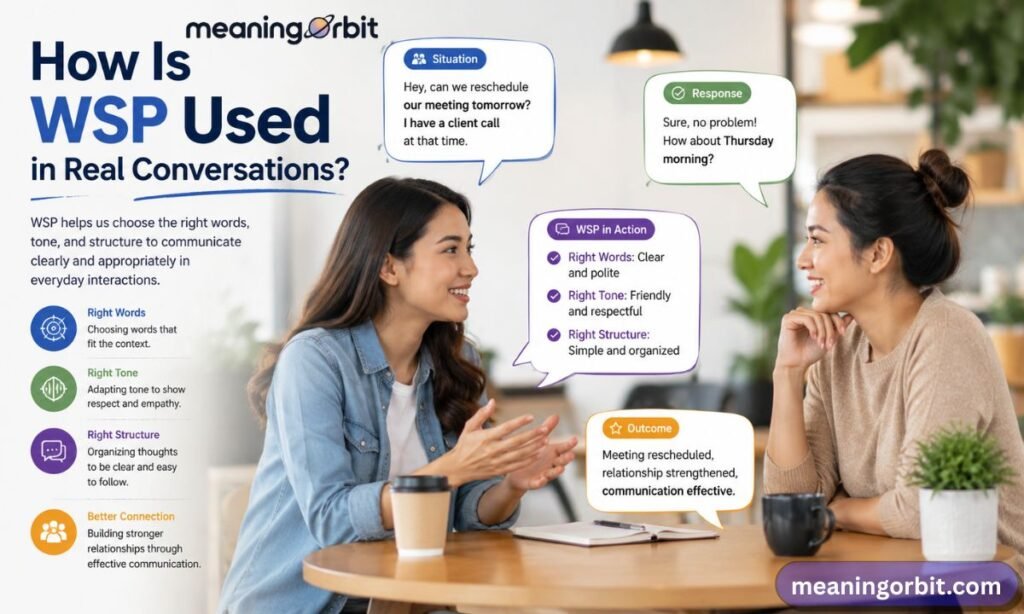
Understanding a word is one thing. Seeing it in action is another. Here are some real-world texting examples so you can spot (and use) it with confidence.
Example 1: The Casual Check-In
Friend: wsp You: nm just watching netflix lol, u?
Example 2: The Plans Inquiry
Friend: wsp tonight? You: thinking of going out, why?
Example 3: The Opening Move
Crush: wsp 👀 You: [proceed with caution and excitement in equal measure]
Example 4: The Group Chat Opener
Someone in the group chat: wsp everyone Everyone else: [ignores it for 45 minutes then suddenly everyone responds at once]
Notice how “wsp” almost never stands alone with a question mark. That is part of its charm. It is so casual that even punctuation feels like overkill.
WSP vs Other Similar Slang: A Quick Comparison
It helps to know how WSP fits alongside other similar abbreviations so you do not mix them up.
| Abbreviation | Full Form | Tone | Common Platform |
| WSP | What’s up? | Casual, friendly | Snapchat, Instagram, iMessage |
| WYD | What you doing? | Casual, sometimes flirty | Instagram, Twitter/X |
| HMU | Hit me up | Inviting, social | All platforms |
| WYA | Where you at? | Direct, curious | Snapchat, text |
| NGL | Not gonna lie | Honest, confessional | All platforms |
| IRL | In real life | Clarifying | All platforms |
WSP is the most passive of the group. It invites a response without demanding one. WYD is slightly more specific because it asks what you are physically doing right now. HMU is more active since it is an invitation rather than a question.
If you get a “wsp,” a chill response is perfectly fine. If you get a “WYD,” they probably want to make plans.
Does WSP Have Other Meanings?
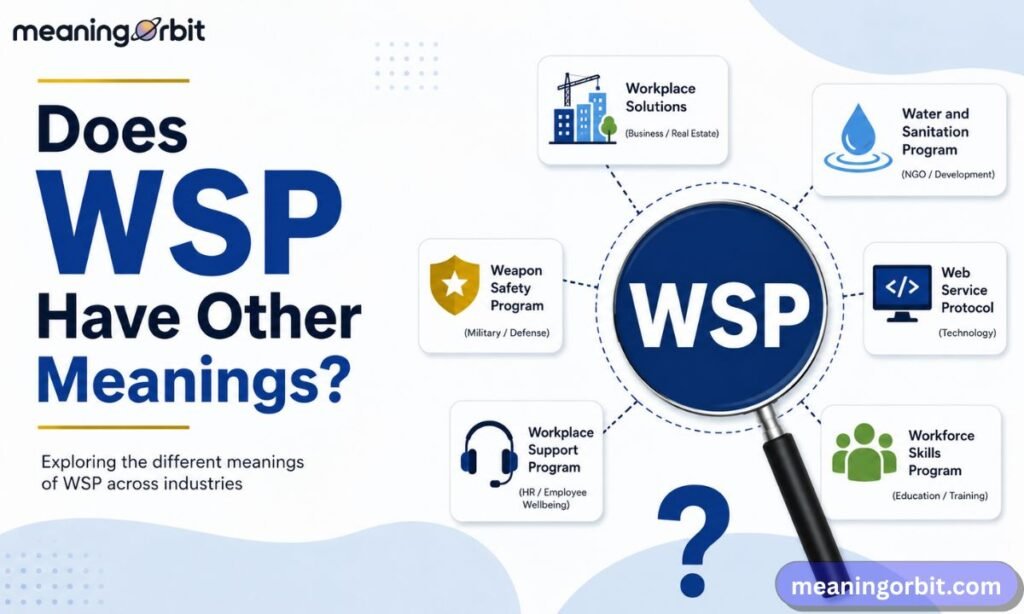
Here is something most guides skip over. WSP does have a few other meanings depending on the context, and confusing them can lead to some awkward conversations.
WSP as “White Sox Park” is used by baseball fans referring to the old name of the Chicago White Sox stadium. If a Chicago sports fan texts you “WSP” after a game, they are probably not asking about your day.
WSP as “Waste and Sanitation Program” or similar organizational acronyms pops up in professional or government contexts. If you receive this in a formal email, no one is checking in on your evening plans.
WSP as a music reference sometimes refers to the jam band Widespread Panic. Their devoted fanbase, known as “Spreadheads,” uses WSP constantly on fan forums and social media.
The key to decoding any abbreviation is context. A text from your college roommate saying “wsp” almost certainly means “What’s up?” A document from a city government saying “WSP” probably means something far less fun.
Is WSP Biblical or Historically Rooted?
This is an interesting question that comes up because of how language and greeting culture have deep historical roots.
The phrase “What’s up?” does not appear in biblical texts, but the concept of a casual, friendly greeting is absolutely ancient. In the Old Testament, greetings like “Shalom” (peace be upon you) served the same social function: acknowledging someone’s presence warmly and opening space for conversation.
In Ancient Greek culture, “Khaire” (rejoice!) was the everyday greeting. The Romans used “Salve” (be well). In each era, cultures developed short, low-effort ways to signal goodwill and openness to another person.
WSP is the modern descendant of this same human instinct. Three letters. No effort. Universal warmth. The medium changed. The meaning behind the gesture? It has always been the same.
Common Mistakes People Make With WSP
Let’s talk about slip-ups. A few of these are surprisingly easy to make.
Mistake 1: Overthinking the response. “Wsp” does not require a thesis. A simple “nm u?” (nothing much, you?) is the textbook reply. Do not write three paragraphs in response to someone who sent three letters.
Mistake 2: Confusing WSP with WPS. WPS stands for “Wi-Fi Protected Setup,” which is a router configuration feature. Sending your IT friend “wps?” when you meant “wsp?” could result in an unsolicited networking tutorial. Be careful.
Mistake 3: Using WSP in professional settings. If you are texting your boss, your professor, or a client, please write “Hello” or “How are you?” like a civilized adult. WSP is for people you know well enough to not bother with punctuation.
Mistake 4: Assuming it is flirty. WSP is not inherently romantic. It can be. It often is not. Context and relationship matter far more than the word itself. Read the room (and the chat history).
Who Uses WSP Most Often?
WSP is primarily used by Gen Z and younger Millennials, roughly the 15 to 35 age bracket. It lives most comfortably on Snapchat, Instagram, and iMessage. On platforms like LinkedIn or email, it would feel wildly out of place (though mildly entertaining if someone tried).
Interestingly, WSP has crossed cultural and geographic lines more than most slang terms. Because it is just shorthand for a very universal greeting, it gets used widely across different countries that use English as a primary or secondary language.
If someone in your life uses WSP regularly, they are probably someone who texts fast, values low-effort communication, and genuinely just wants to know what you are up to. No hidden agenda. No drama. Just checking in.
Which Greeting Should You Use and When?
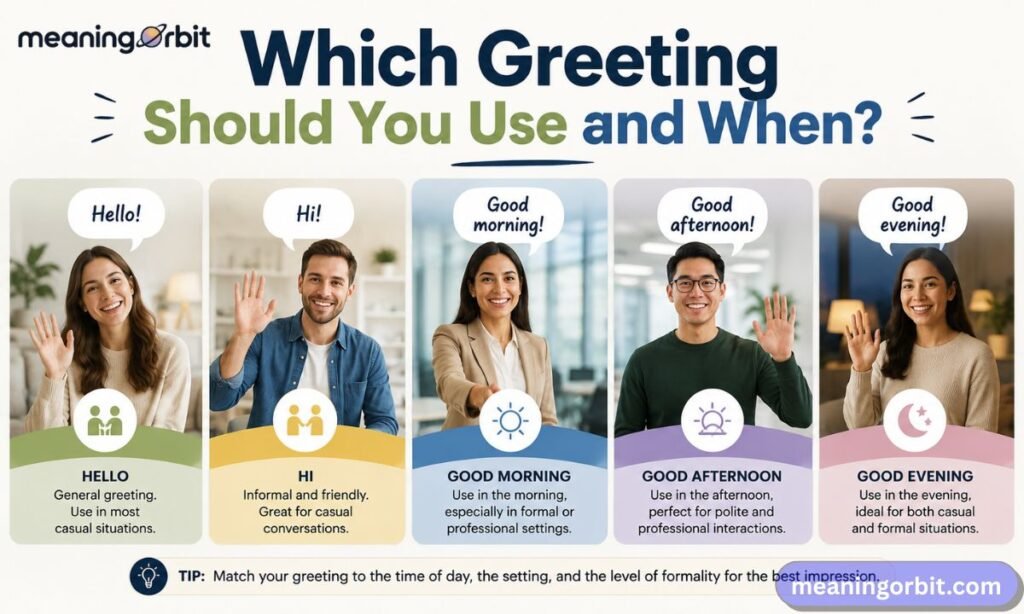
Since a few similar options exist, here is a simple guide to picking the right one.
Use WSP when:
- You want to start a casual conversation with a friend
- You have no specific question but want to connect
- You are on Snapchat, Instagram, or texting informally
Use WYD when:
- You want to know what someone is literally doing right now
- You are trying to figure out if someone is free
- You are being slightly more direct than “wsp”
Use HMU when:
- You want someone to reach out to you
- You are suggesting future plans or availability
- You want to sound a little more intentional
Stick with “Hello” or “Hey, how are you?” when:
- You are texting anyone in a professional context
- You are reaching out to someone for the first time
- You want to make a good impression and three-letter greetings might undermine that
The bottom line is that WSP is a comfort-zone word. It belongs between people who already know each other well enough to skip the formalities.
How to Reply to WSP Without Overthinking It
If you are still unsure how to reply, here are the most natural options.
The classic response: “nm u?” (nothing much, you?)
The honest response: “honestly just been [insert your current situation]”
The social response: “wsp!! [something you want to talk about]”
The non-committal response: “lowkey tired lol, u?”
The direct response: “nothing much, you free later?”
There is genuinely no wrong answer here as long as you do not write a formal letter in response. Match their energy. They kept it short so you can too.
Frequently Asked Questions
Is WSP the same as “wassup”?
Yes. WSP, wassup, what’s up, and wuts up are all variations of the same casual greeting. WSP is simply the most abbreviated form and the one most commonly used in digital text communication today.
Can WSP be used sarcastically?
Absolutely. Like most casual language, tone shifts meaning. If someone sends you “wsp 🙄” after you have not replied to their messages for three days, that is not a friendly check-in. That is a very polite way of saying they noticed.
Is WSP only used in English?
WSP is primarily an English-language abbreviation, but because “What’s up?” has been exported globally through American pop culture, you will find WSP used by English speakers and learners across many countries. Non-English speakers typically use their own slang equivalents rather than WSP directly.
Conclusion
Language never stops moving. New abbreviations appear almost daily, and old ones quietly fade out. But WSP has earned its staying power because it captures something timeless: the casual, effortless way people check in on each other.
From ancient greetings carved into stone tablets to three-letter texts sent at midnight, humans have always found a way to say “I see you, I’m here, what’s going on?” The words keep changing. The warmth behind them never really does.

William is a dedicated writer in the meaning niche with 4 years of experience, helping readers understand the true meanings of words and ideas in a simple way.His goal is to make understanding meanings simple, useful, and engaging for everyone.
