

You just got a text that says “IKK” and now you are sitting there wondering if autocorrect betrayed someone or if this is some secret code only Gen Z knows.
You are not alone. IKK pops up in chats all the time, yet most people either guess or scroll past it confused. Let this be the last time that happens to you. Here is the clearest, fastest answer you will find anywhere.
What Does IKK Mean in Text?
IKK stands for “I Know, Know” or more commonly “I Know, Right?” in casual texting and online conversations. It is an intensified version of “IK” (I Know), used when someone wants to strongly agree with something or express that they deeply relate to what was just said.
Example:
Person A: “That exam was way harder than the teacher said it would be.” Person B: “IKK, I wanted to cry in the exam hall.”
IKK vs IK: What Is the Difference?
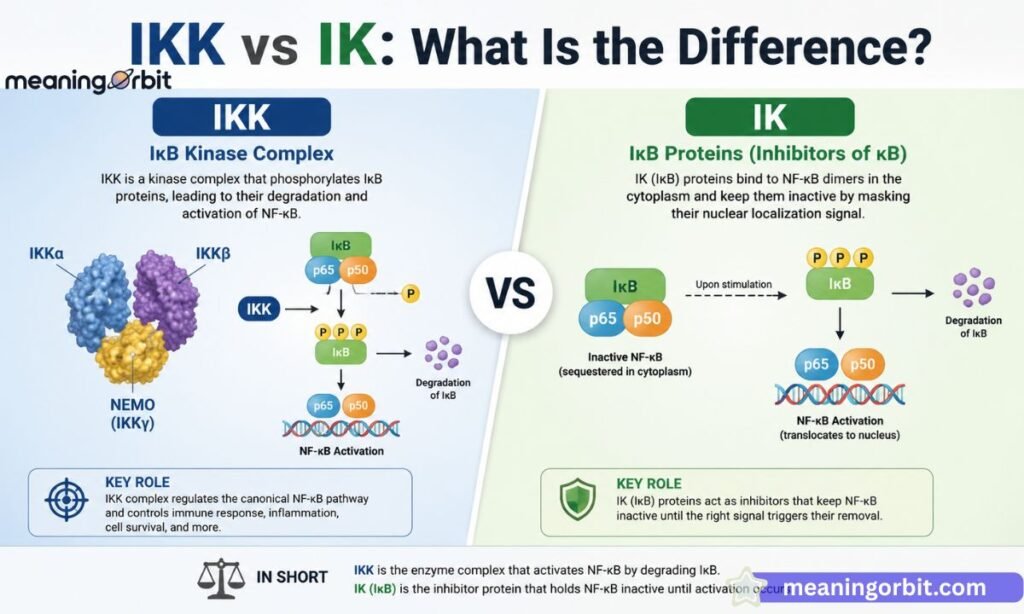
If IK means “I Know,” then IKK is just its louder, more dramatic cousin. The double K adds extra emphasis, the same way you would say “I KNOW, I KNOW” out loud when someone finally voices something you have been feeling forever.
| Term | Full Form | Tone | Best Used When |
| IK | I Know | Calm, casual | You simply agree |
| IKK | I Know, Know / I Know Right | Emphatic, relatable | You deeply agree or relate |
| IKR | I Know, Right | Validating | You share the same feeling |
| IKTR | I Know That’s Right | Strongly affirming | Over-the-top agreement |
Where Did IKK Come From?
Like most internet slang, IKK was not invented in a boardroom. It grew organically in text conversations, comment sections, and social media platforms like Twitter, TikTok, and Instagram DMs where fast, expressive responses became a cultural norm.
The trend of doubling letters for emphasis in texting is nothing new. People have been writing “omgg,” “noooo,” and “yayyy” for years. IKK simply follows that same emotional logic, where the extra letter carries extra feeling.
It belongs to the broader family of agreement slang that also includes terms like IKR, FACTS, FR FR, and SAME. Each one fills a slightly different emotional slot in a conversation.
Is IKK Used Differently Across Platforms?
Yes, and this is something most articles skip entirely so pay attention here.
On TikTok and Instagram, IKK appears mostly in comment sections where people are reacting to relatable content. Creators post something painfully accurate about daily life, and the comments fill up with “IKK LITERALLY” or “IKK THIS IS ME.“
On WhatsApp and iMessage, it shows up in personal chats between close friends where formality is completely out the window.
On Twitter/X, people sometimes use it sarcastically, which brings us to an important point: context always controls meaning. IKK said sincerely is warmth and agreement. IKK said sarcastically is eye-rolling wrapped in two letters.
Real Life Examples of IKK in Conversation
Seeing a word in action teaches you far more than any definition. Here are natural, real-life texting scenarios:
Example 1 (Relatable agreement):
“Why does Monday always feel like it comes twice as fast as Friday?” “IKK, the universe has a terrible sense of humor.”
Example 2 (Emotional validation):
“I studied for five hours and still blanked during the test.” “IKK that feeling is the worst thing in existence.”
Example 3 (Sarcastic tone):
“Wow, they announced another meeting that could have been an email.” “IKK, so shocking, truly life-changing news.”
Does IKK Have Any Biblical or Historical Significance?
Here is a question that surprises most people: does IKK mean anything outside of texting? Technically, the abbreviation IKK does appear in some religious and historical references. In certain biblical concordances and Hebrew study tools, IKK or similar letter groupings appear as shorthand notation in textual criticism and manuscript references.
However, in everyday modern usage, this connection is completely irrelevant. No one typing IKK in a group chat is thinking about ancient manuscripts. The internet gave this abbreviation its current life, and that is the meaning that matters in 2024 and beyond.
If someone tries to tell you IKK has some ancient spiritual meaning in a text conversation, you can politely inform them that they are overthinking a very enthusiastic “I know.”
Common Mistakes People Make With IKK
Even short words get misused. Here are the most common errors people make with IKK so you can avoid them:
- Using it in formal settings: IKK belongs in casual conversations only. Do not drop it in a work email, a college application, or a message to your professor. It will not go well.
- Confusing IKK with IKR: Both express agreement, but IKR (I Know, Right) is slightly more questioning and conversational. IKK is more of a pure, emphatic confirmation. They are close but not identical in feeling.
- Overusing it in one conversation: If every reply is IKK, it starts to feel hollow. Use it when you genuinely and strongly relate to something, not as a filler response.
- Assuming it is universal: Not everyone knows what IKK means, especially people outside texting-heavy age groups. Read your audience before using it.
Which One Should You Use: IK, IKK, or IKR?
Use IK when you want to keep things short and simple, just confirming you are aware of something.
Use IKK when you want to express that you not only know but you deeply feel or strongly relate to what was said. It is your go-to for maximum agreement energy.
Use IKR when you want that slight conversational bounce, like you are inviting the other person to keep sharing because you are completely on their side.
In short: IK is calm, IKK is passionate, and IKR is social. Pick based on the emotional temperature of your conversation.
Related Slang You Might See Alongside IKK
Once you understand IKK, you will start noticing it travels in good company. These are some of the related texting terms that often appear in the same conversations:
- FR or FR FR (For Real) used to strongly affirm something true
- SAME used when someone voices your exact thought or feeling
- FACTS used as sharp, no-argument agreement
- LOWKEY used to admit something quietly or with mild embarrassment
- NGL (Not Gonna Lie) used before an honest admission
When Should You Avoid Using IKK?
Knowing when NOT to use something is just as important as knowing how to use it. Avoid IKK in:
- Professional or workplace communication where it comes across as immature
- Formal written content like reports, emails, or academic submissions
- Conversations with people who are not familiar with internet slang, where it creates confusion instead of connection
- Situations requiring empathy over agreement, where something deeper than “IKK” is clearly called for
Why Internet Slang Like IKK Actually Matters
Some people roll their eyes at texting slang, and honestly, that reaction is understandable. But here is the thing: language evolves because people evolve. Every generation adds its own shorthand to human communication, from Victorian-era telegrams to 1990s AOL chat to today’s DMs.
IKK serves a real purpose. It lets someone feel heard and validated in under three keystrokes. In a world where people are constantly communicating across screens, that kind of quick emotional shorthand is genuinely useful.
Understanding these terms also closes generational gaps, makes you a better communicator, and honestly just keeps you from looking confused at your own phone. That alone is worth knowing.
Frequently Asked Questions
What does IKK mean in a text message?
IKK means “I Know, Know” or a strongly emphasized version of “I Know.” It expresses deep agreement or relatability in casual texting conversations.
Is IKK the same as IKR?
They are similar but not identical. IKK is a pure, emphatic confirmation of agreement. IKR (I Know, Right) carries a slightly more conversational and questioning tone, inviting further discussion.
Can I use IKK in formal writing or professional messages?
No. IKK is informal slang meant for casual texting and social media. It has no place in professional emails, academic writing, or formal communication of any kind.
Conclusion
So there you have it. IKK means “I Know, Know” or the emphatic form of “I Know,” used to express deep agreement or strong relatability in casual text conversations. It is informal, expressive, and extremely easy to use once you understand the emotional weight it carries.
The next time someone texts you something painfully accurate about life and you feel it in your soul, go ahead and hit them with a confident IKK. They will know exactly what you mean.

William is a dedicated writer in the meaning niche with 4 years of experience, helping readers understand the true meanings of words and ideas in a simple way.His goal is to make understanding meanings simple, useful, and engaging for everyone.
