

Everyone keeps throwing around the word zip and you are standing there nodding like you totally get it. You do not. And that is completely fine, because slang moves faster than your Wi-Fi on a bad day.
In 2026, zip in slang refers to zero, nothing, or an ounce of drugs depending on the context. Both uses are alive, and knowing which one applies where will save you from a very awkward conversation.
So What Does Zip Mean in Slang?
Let us skip the fluff and get straight to the point.
Zip in slang has two primary meanings in 2026:
- Zero or Nothing: As in, “He paid zip for that.” Means absolutely nothing, nada, zilch.
- An Ounce of Something: In street slang and drug culture, a zip equals one ounce (28 grams), most commonly of marijuana or another substance.
Both uses are real, both are common, and the context of your conversation will always tell you which one is being used. If someone says “I got a zip last night,” they are almost certainly not talking about their savings.
Where Did Zip Slang Come From? The Origin Story
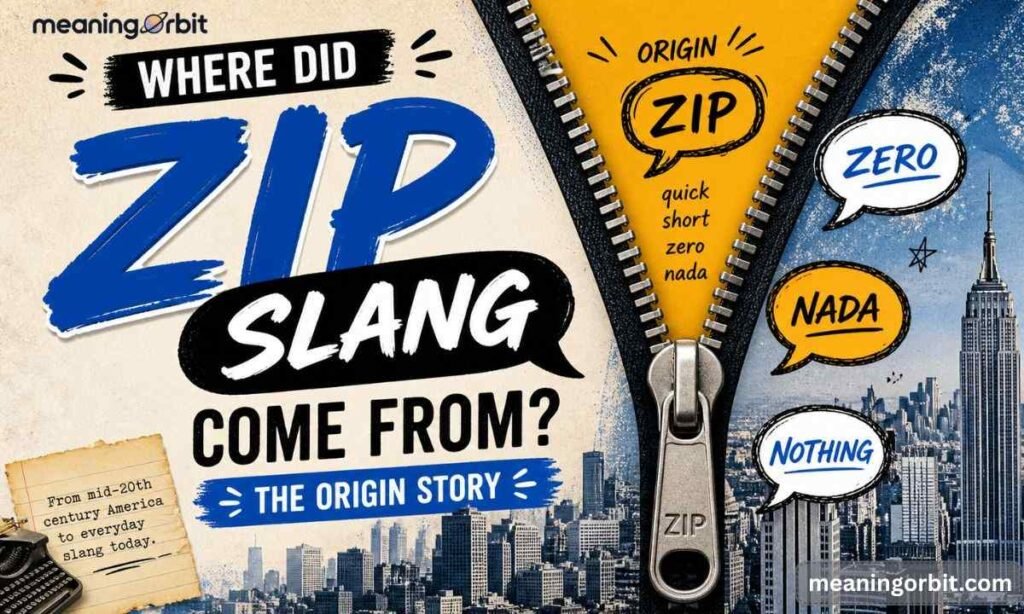
Words do not just fall out of the sky. They come from somewhere. The “nothing” meaning of zip traces back to early 20th century American slang. It is believed to have evolved from “zilch” and “zero” culture, with the punchy single-syllable sound making it a natural fit for casual speech.
By the mid-1900s, zip was already in wide use to mean nothing, like in sports scores. A team scoring “zip” meant they scored zero. That usage stuck hard.
The drug-quantity meaning came later through urban slang communities, where “zip” became shorthand for a ziplock bag containing one ounce of product. The ziplock connection made it practical, memorable, and discreet all at once. Language is clever like that.
Zip as Nothing: How People Use It in 2026
The “nothing” meaning of zip is alive and thriving. You will hear it in casual conversations, online comment sections, sports commentary, and even formal writing when someone wants to punch up their tone.
Here are some real-sounding examples:
- “I studied for hours and learned zip.”
- “She gave me zip in return for all my help.”
- “The team scored zip in the first half.”
- “He knows zip about cooking but acts like a chef.”
Notice how zip replaces “nothing” completely without changing the sentence structure. It is a one-to-one swap and it always lands with a satisfying sharpness.
Zip as an Ounce: How People Use It in Street Slang
In street slang and hip-hop culture, a zip is consistently one ounce. You will hear this in rap lyrics, informal conversations, and coded language between people who do not want to be too obvious about what they are discussing.
Common phrases you might encounter:
- “I picked up a zip last week.” (Bought an ounce of something)
- “That zip is going for $300 around here.” (Referring to price per ounce)
- “He always buys in zips, never anything smaller.”
This usage is particularly common in music and has been popularized by countless rap songs since the early 2000s. By 2026, it is so embedded in urban vocabulary that even people outside that community recognize it.
Quick Comparison: Zip Meaning at a Glance
| Context | What Zip Means | Example |
| Everyday Speech | Zero or Nothing | “He paid zip for it.” |
| Sports Commentary | Score of Zero | “The team got zip.” |
| Street / Drug Slang | One Ounce (28g) | “Grabbed a zip yesterday.” |
| Online / Social Media | Zero, None, Zilch | “She posted zip all week.” |
| Music / Hip-Hop Lyrics | One Ounce of Substance | “Selling zips on the block.” |
Is Zip Related to Zip code or ZIP Files? Not Quite
You might be wondering if there is a connection between the slang zip and things like ZIP codes or ZIP files on your computer. The short answer is no, not really.
ZIP code stands for Zone Improvement Plan, introduced by the US Postal Service in 1963. That is a completely separate origin.
ZIP files are named after the concept of compressing data quickly, as in “speeding it up.” Also unrelated.
The slang versions of zip grew independently through everyday speech and street culture. Same word, three different lives. English is wild.
Biblical and Historical Echoes of “Nothing”

The concept of “nothing” has always carried weight in human language and culture. While the word zip itself is modern American slang, the idea it represents is as old as language itself.
In the Bible, the concept of emptiness and nothingness is a recurring theme. Ecclesiastes 1:2 famously describes life as “vanity of vanities, all is vanity” which in many interpretations means “all is nothing” or “all is emptiness.” Cultures across history have searched for words that capture the feeling of absolute zero, of coming away with nothing.
The fact that English slang landed on something as punchy as zip to fill that role speaks to how much humans want quick, satisfying words for big ideas. Zero, nothingness, emptiness. Zip handles all of it in one syllable.
Zip vs. Zilch vs. Nada: What Is the Real Difference?
People often use zip, zilch, and nada interchangeably, and for the most part, they are correct to do so. But there are small personality differences worth knowing.
- Zip: Sharp, punchy, American in feel. Best for quick dismissal. “He knows zip.”
- Zilch: Slightly more emphatic, carries a comic tone. “I got zilch from that deal.”
- Nada: Borrowed from Spanish, slightly more casual and warm. “There is nada in the fridge.”
- Zero: Neutral and formal. Works in all settings but lacks personality.
- Nothing: The standard, all-purpose option. Boring but always correct.
If you want maximum impact with minimum syllables, zip is your word. It lands fast and leaves no room for argument.
Common Mistakes People Make with Zip Slang
Even native English speakers sometimes slip up with slang. Here are the most common mistakes:
- Using zip in formal writing: “The report contained zip useful data” is not appropriate in a professional report. Stick to “nothing” in formal contexts.
- Misreading the drug context: If someone in a casual setting mentions “getting a zip,” do not assume the worst. Context matters enormously.
- Confusing zip with zipper: Some people use “zip” colloquially to mean zipping up a jacket or bag. This is not slang, this is literal. Do not mix these up in conversation.
- Overusing it: Like any slang, using zip in every sentence makes it lose its punch. Use it when it fits naturally.
Which Version of Zip Should You Use?
If you are in a casual, everyday conversation and want to say “nothing,” go ahead and use zip. It is punchy, clear, and universally understood in English-speaking countries.
If you are writing professionally or in an academic setting, skip the slang altogether. “Nothing” or “zero” will serve you better.
If you are discussing quantities and someone uses zip, make sure you understand the setting before responding. In drug-related slang environments, a zip means an ounce. In any other context, it almost certainly means nothing.
The safest rule: read the room. Slang always depends on who you are talking to and where you are.
How Gen Z and Millennials Use Zip in 2026

Slang is generational, and zip has an interesting position across generations. Millennials grew up hearing zip in sports broadcasts and from older family members. For them, it mostly means nothing.
Gen Z has absorbed both meanings. They use zip naturally in texts and social media to mean zero (“gave that exam zip effort”) while also being fully aware of the drug slang meaning from music and pop culture.
On platforms like TikTok, X (formerly Twitter), and Instagram, you will see zip used casually in comments and captions, almost always meaning nothing or zero. The drug-quantity meaning mostly stays in music, specific community conversations, and coded speech.
So if a Gen Z person says your meme got “zip likes,” you should probably rethink your content strategy. That one stings no matter how you interpret it.
Related Slang Terms Worth Knowing in 2026
If you are expanding your slang vocabulary, these words work well alongside zip:
- Brick: A larger quantity, usually a kilogram in drug slang. Opposite end of the scale from a zip.
- Dub: Twenty dollars worth of something, or a $20 bag. Much smaller than a zip.
- Nada: Nothing, as discussed. Spanish-origin word that fits anywhere zip fits.
- Ghost: To disappear or stop responding. Popular slang in the same circles.
- No Cap: Meaning “no lie.” “No cap, he got zip for that trade” means “honestly, he got nothing.”
Frequently Asked Questions
Does zip always mean drugs in slang?
No. Zip most commonly means nothing or zero in everyday speech. The drug-quantity meaning (one ounce) is specific to street slang and music culture. Context will almost always make it clear which meaning applies.
Is zip considered rude or offensive?
Not at all. Zip meaning nothing is completely neutral and acceptable in casual conversation. It carries no offensive connotation on its own. The drug-related meaning is not offensive either, though it is context-specific.
Can I use zip in a professional email?
It is better not to. While zip is widely understood, professional writing calls for formal language. “Zero” or “nothing” will communicate the same message without raising eyebrows.
Conclusion
Slang keeps language alive, and zip is one of those words that has earned its permanent place in the vocabulary of casual speech. Whether you are using it to describe an empty result or decoding what someone means in a music lyric, you now have everything you need.

William is a dedicated writer in the meaning niche with 4 years of experience, helping readers understand the true meanings of words and ideas in a simple way.His goal is to make understanding meanings simple, useful, and engaging for everyone.

1 thought on “Zip Meaning Slang in 2026: The Complete Guide You Actually Need”